The Sun-Seeker's Sanctuary
What happens when we trust young children with real power tools and the lives of vulnerable creatures? Our Explorers designed solar-tracking sanctuaries—navigating the stubborn resistance of plastic, the physics of heat retention, and the deep responsibility of stewardship.
We gathered under the canopy of magnificent old trees at the park, our bodies warming up with a physical challenge: launching off a platform to pluck leaves mid-air from a zipline. This wasn't just a game; it was coordination, risk-assessment, and a calibration of nerves. When the mission call arrived—revealing that our local 'lizards' had been captured and desperately needed climate-controlled sanctuaries—the children didn't hesitate. Clara led the charge, her body tensing and releasing as she flew down the zipline to snatch a lizard from its precarious perch, followed closely by Leo and Maya. But rescuing them was only the first step. Caring for living systems, even represented by these small models, immediately surfaced a quiet gravity: the children realized that without proper shelter, their creatures would not survive the cold.
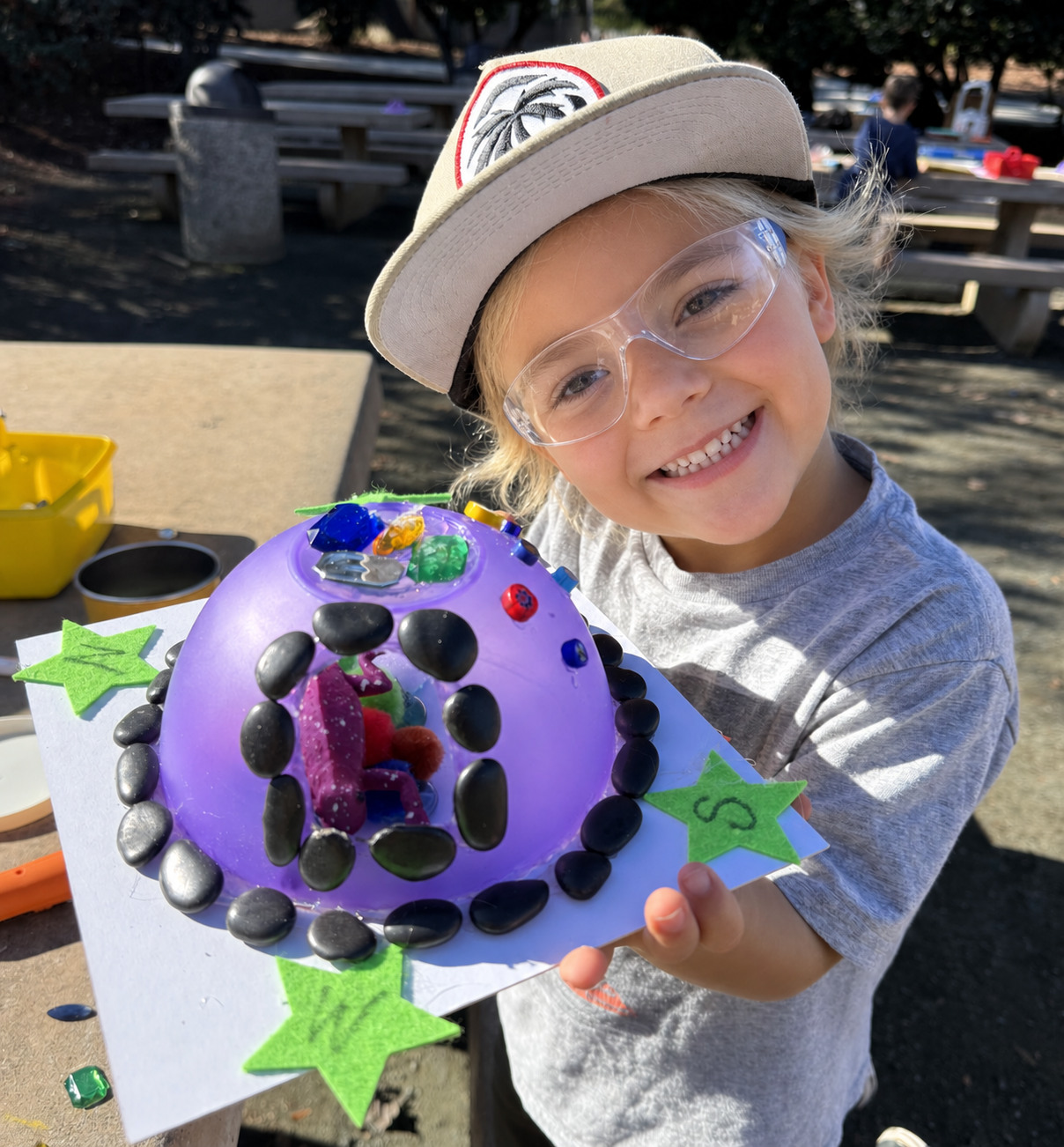
True design thinking doesn't happen on a screen; it lives in the stubborn resistance of real materials. To build the sanctuaries, we introduced a high-speed rotary Dremel tool. The children felt the high-frequency vibration in their palms, learning how plastic melts and fights back if you press too hard, and how a sanding block can patiently smooth away dangerous, jagged edges. There is a profound dignity in trusting a six-year-old with a spinning power tool. They met that trust with absolute stillness and deep, meditative concentration.
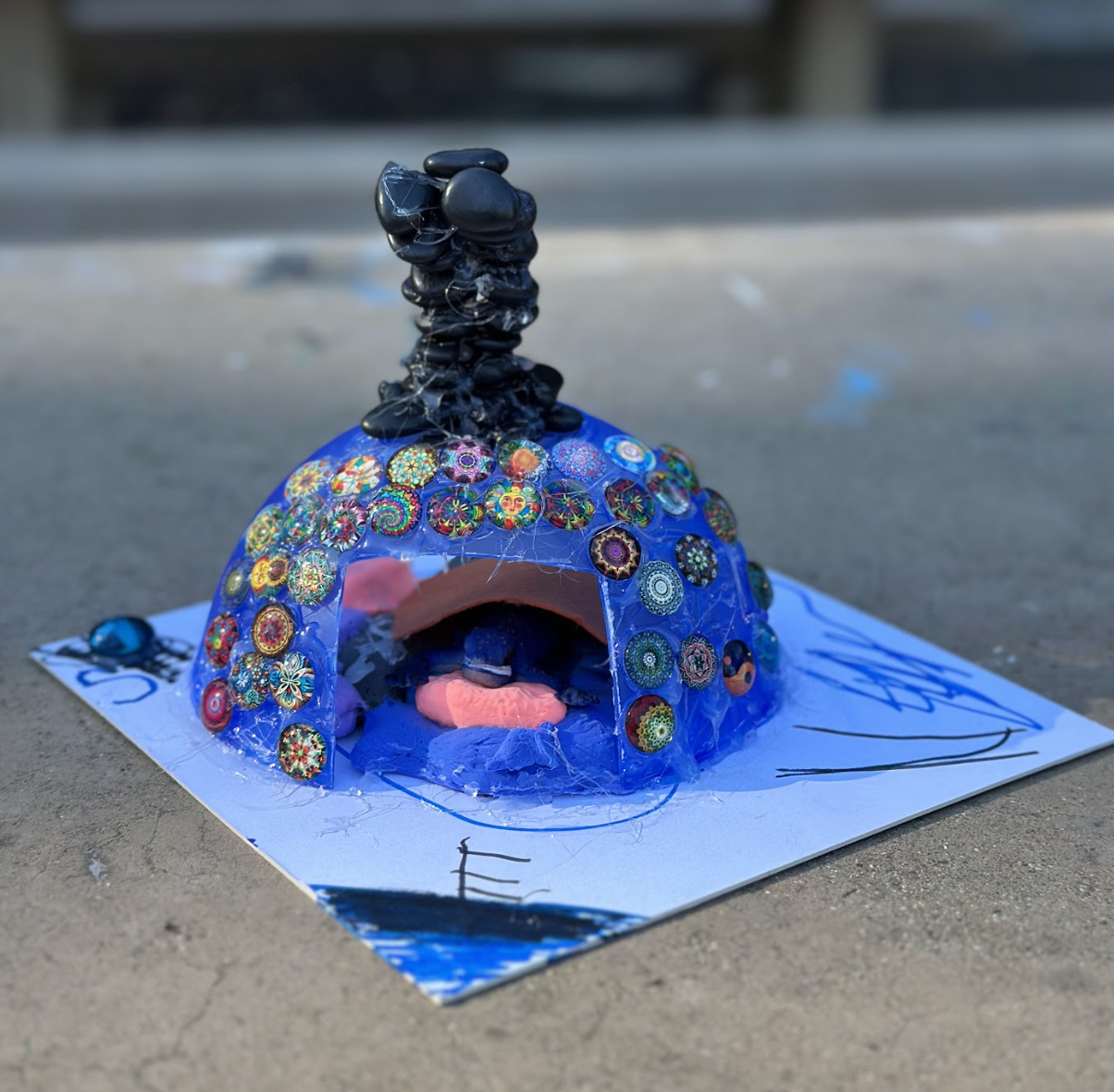
Rather than testing their understanding of solar paths with a conventional quiz, we asked the children to defend their architectural designs. They pointed to their hand-carved windows, explaining how they aligned them to catch both the morning warmth and the final rays of sunset. They justified their placement of dark, heavy river stones inside, explaining how the dark mass would trap the sun's thermal energy to keep their lizards safe through the cold night. In defending these imaginary species, they demonstrated a sophisticated, intuitive grasp of thermodynamics and spatial geometry.
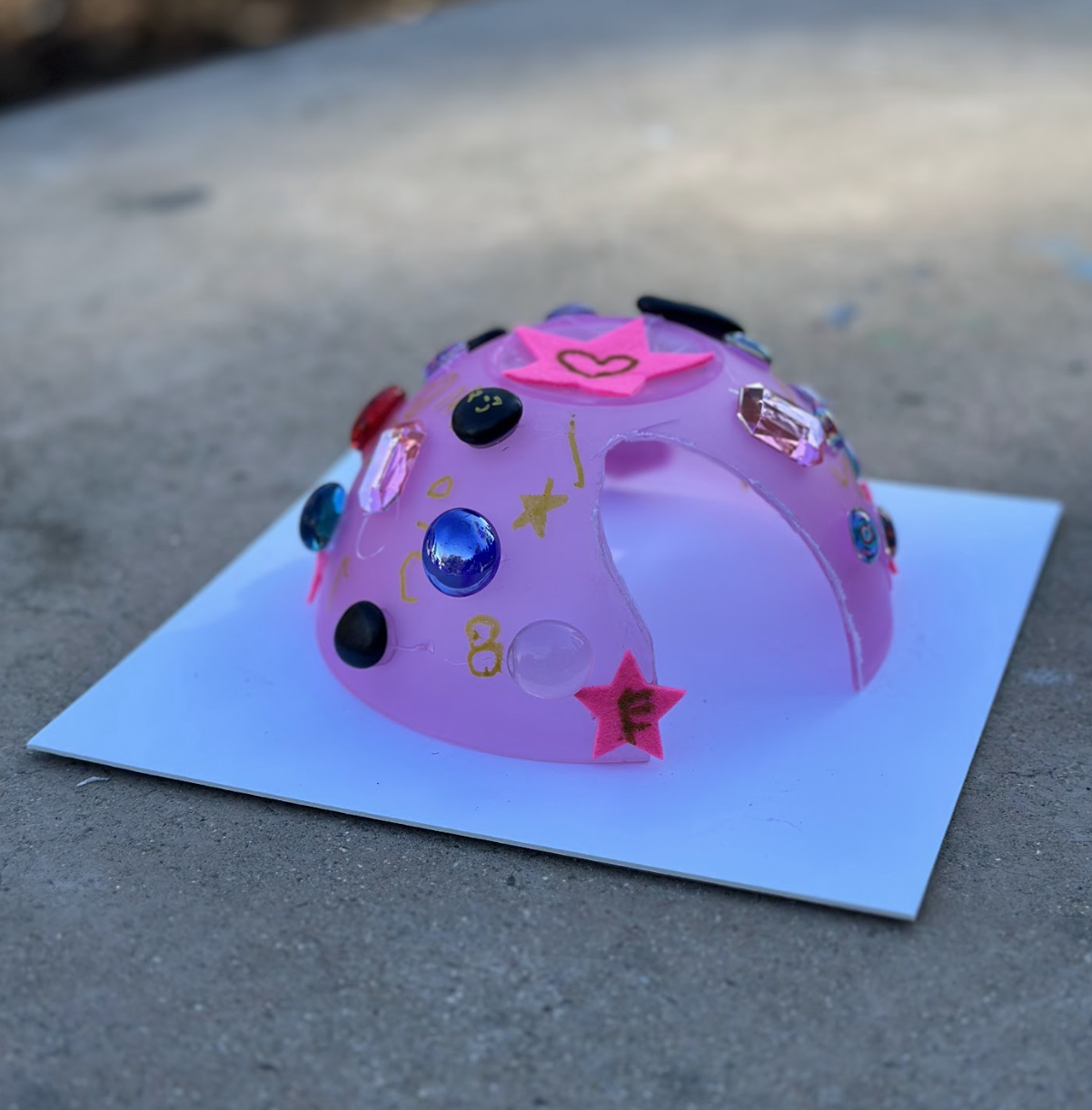
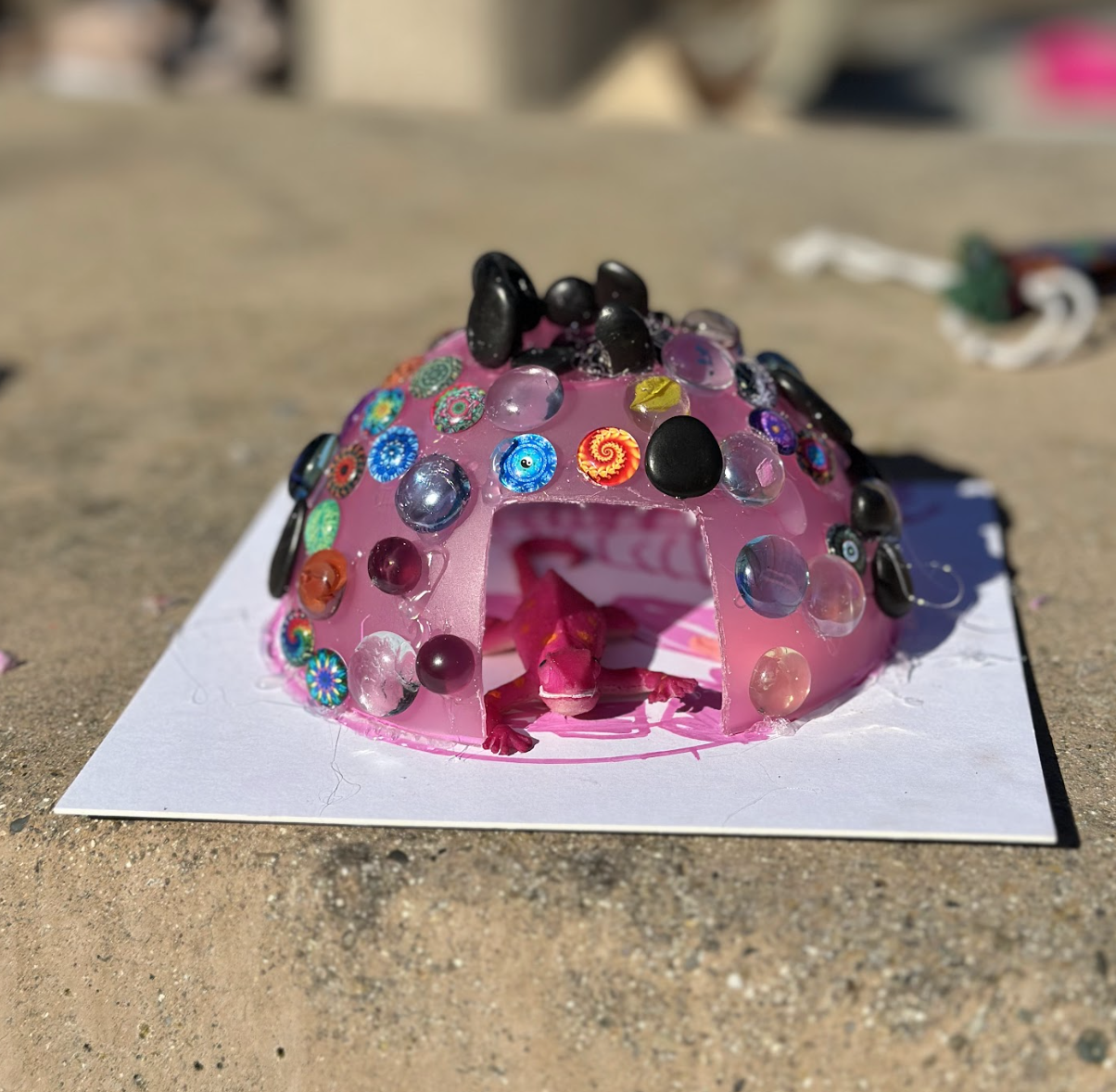
In this single, sunlit morning, we watched a beautiful developmental arc unfold. The children moved from observing living systems, to actively stewarding them, to ultimately inventing entirely new creatures, behaviors, and ecological niches. Once the physical builds were complete, the structured lesson naturally dissolved. The children carried their sanctuaries into the dirt, under exposed tree roots, and into the wild brush, losing themselves in deep, unscripted free play. They narrated complex stories of survival, migration, and community that only they fully understood.
The finished sanctuary was only the beginning. Once it disappeared beneath roots and into brush, it became part of an ongoing world of migration, danger, shelter, and community narrated by the children themselves. The deepest evidence of learning was not the object they carried away, but the world they kept returning to after adult instruction had ended.
When we hand a child a spinning rotary tool and ask them to keep a vulnerable creature warm, we aren't just teaching engineering—we are practicing stewardship.
What this mission grew
This is a normal Tuesday.
Small groups. Real challenges. Kids in the lead. Come see what a week of missions looks like in your area.
Join the Founding Community →