The Siege of Tangle's Fortress
A rain-slicked morning of complex physics, hand-cranked trebuchets, and a beautifully synchronized failure that proved why struggling together is far better than succeeding alone.
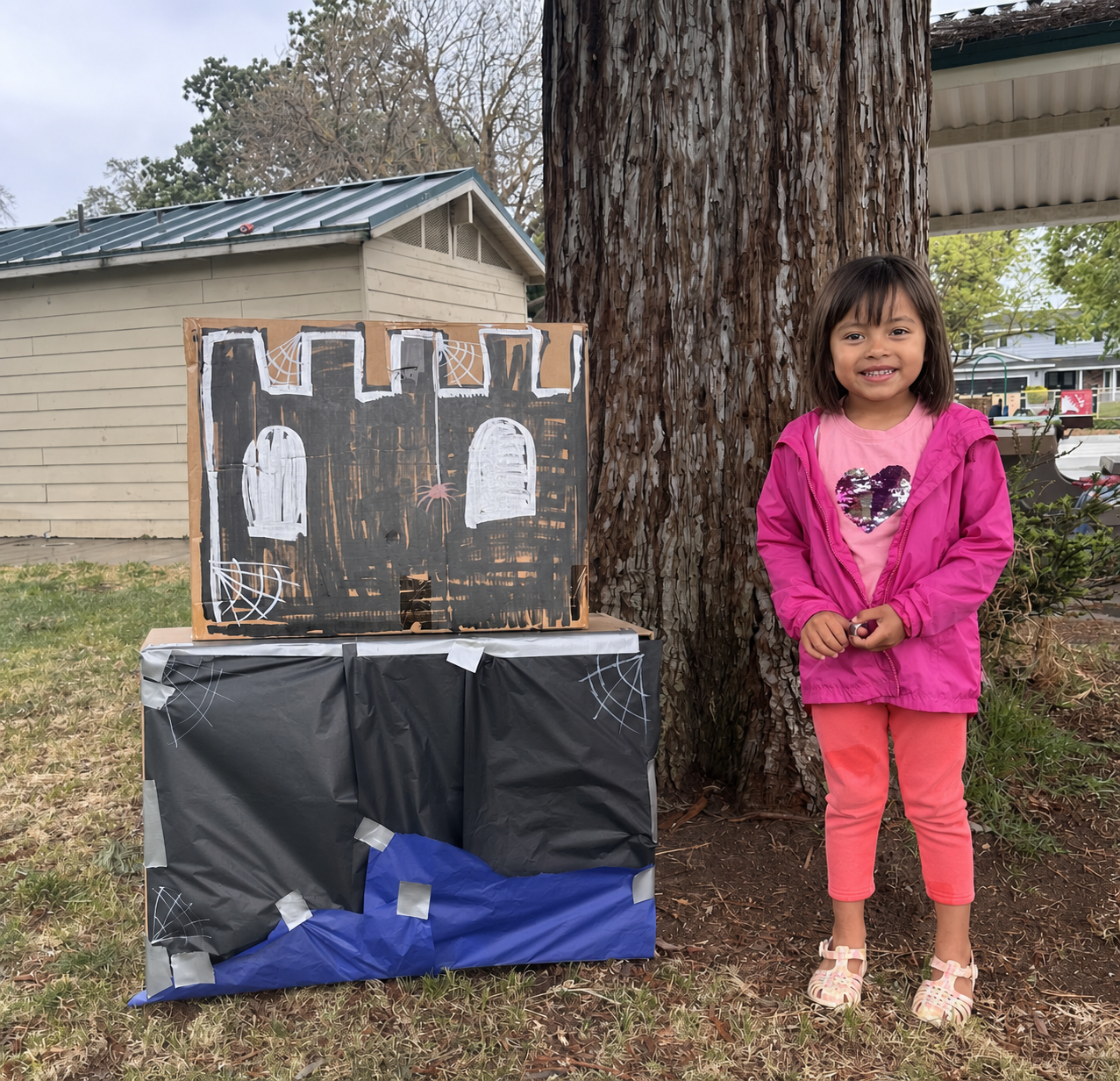
Some mornings try to tell you to stay in bed. It began with a dark sky, a wrong turn, and a sudden downpour that sent us scrambling to a covered park shelter. We had planned the most mechanically complex build of our year—working, hand-cranked wooden trebuchets—and the elements seemed determined to turn our blueprints into soggy pulp. But at Skip School, we meet rain or shine. We do hard things, so we pushed forward, building a hasty tissue-paper fortress for our villain, Tangle, while the rain misted over our work tables.
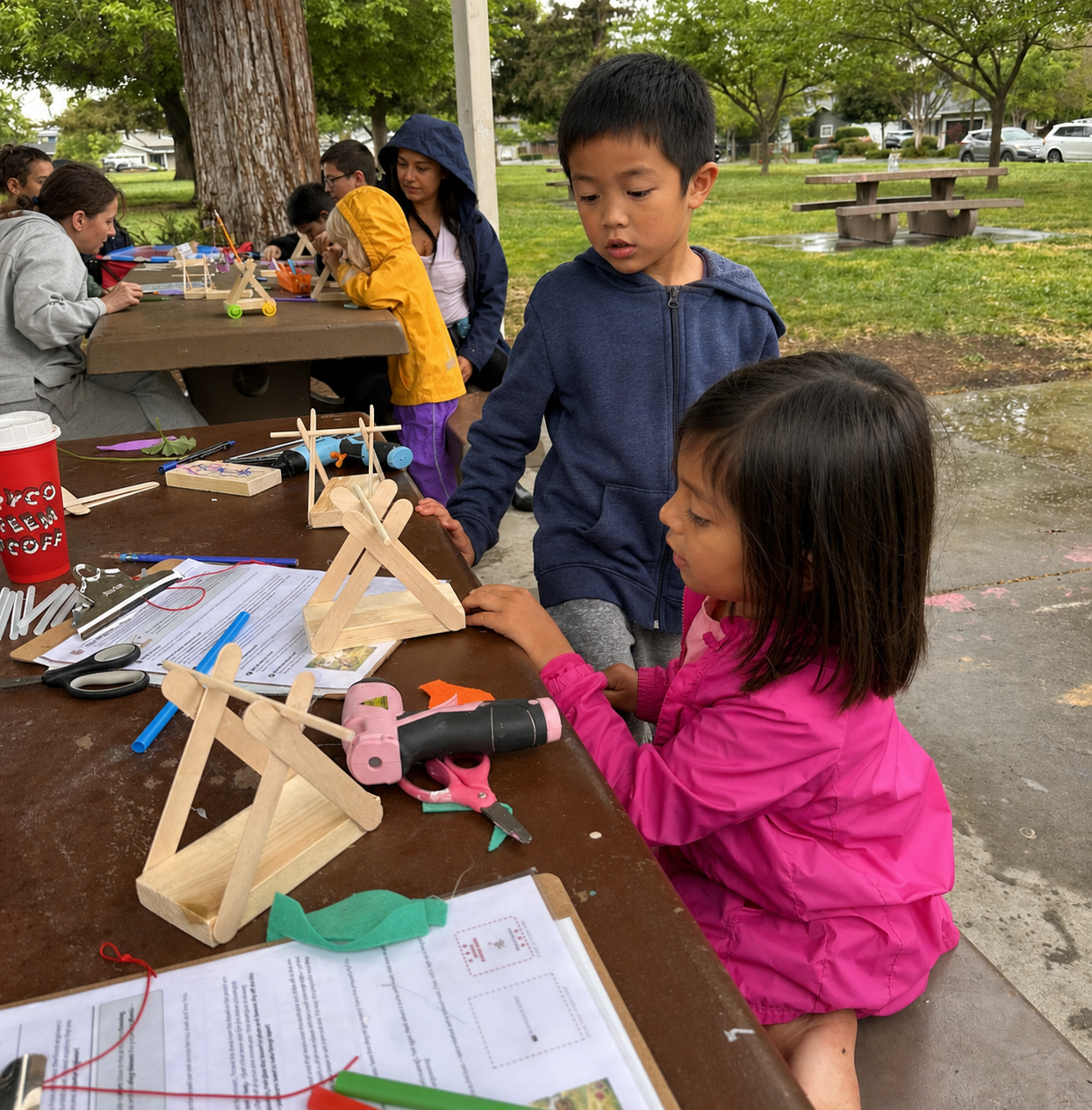
The build was, by all accounts, a beautiful struggle. A trebuchet is not a simple toy; it is a delicate equation of leverage, counterweights, release angles, and sling lengths. In the damp cold, the materials resisted. Knots slipped, wood swelled, and the instructions felt more like medieval riddles. This was not a clean, autonomous child-led activity where adults stood back and watched. It required intense, head-down collaboration. Parents worked side-by-side with their children, modeling the exact brand of patient frustration we want our kids to inherit.
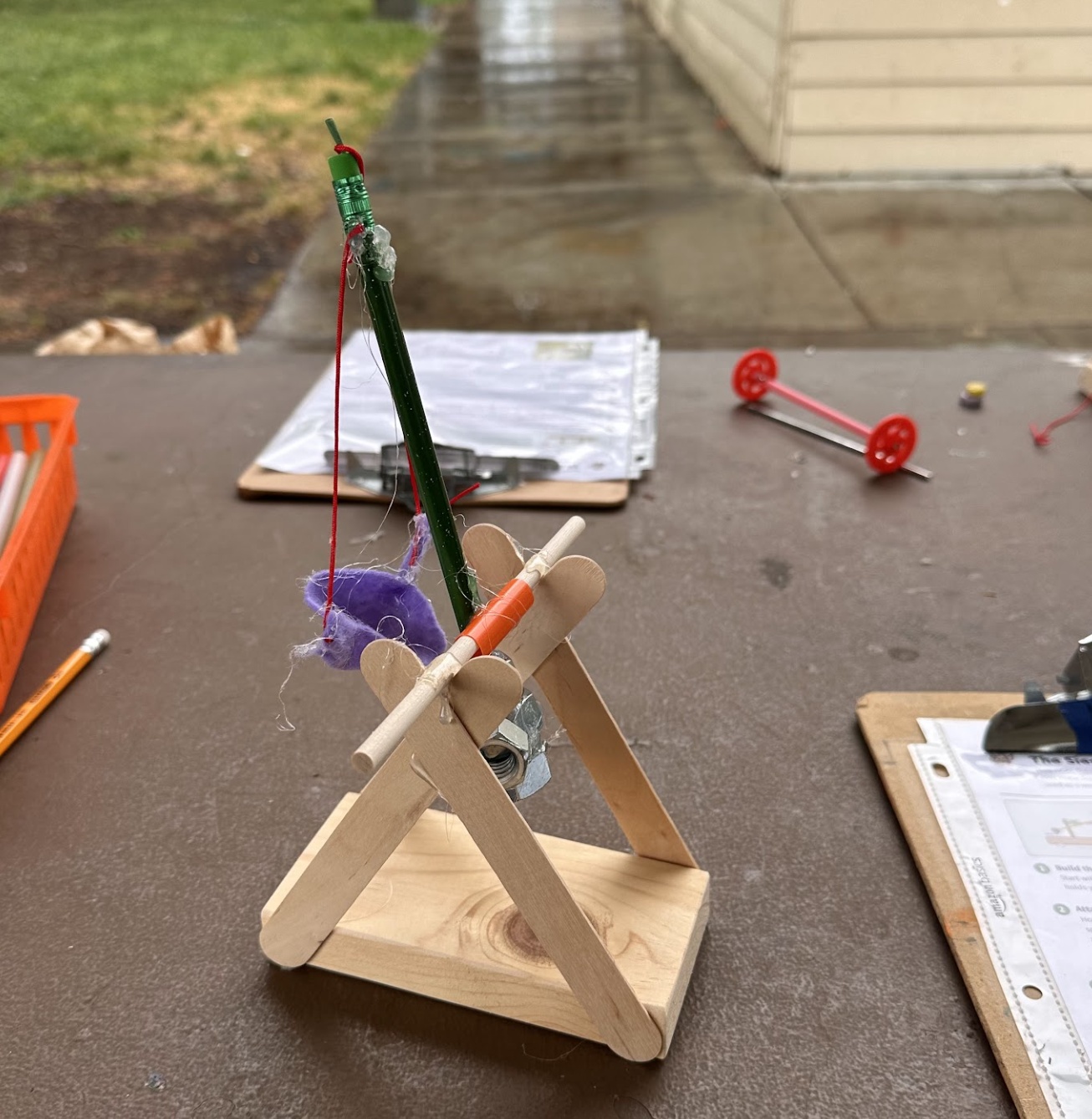
To offset the mounting tension at the tables, we blasted upbeat music through the drizzle. When we finally lined up our completed engines for the grand siege, we queued up a sweeping, cinematic battle soundtrack. Leo stood at the front, rallying the troops. On his signal, the kids released their triggers. The result? A perfectly comical, synchronized miss. Not a single projectile flew. In a conventional classroom, a failed lab experiment is a grade deduction. Here, it was a moment of pure, shared hilarity. Free from the pressure of individual comparison, the kids simply laughed, charged the fortress on foot, tore it open, and discovered the golden eggs hidden inside.
We leaned heavily on the psychological principle of 'desirable difficulties.' True mastery isn't born from seamless success; it's forged when we are allowed to be bad at something before we get good at it. The real magic of the week, however, happened when we stepped away from the structured build. On a windy hike through rolling green hills, the children took the reins. They spotted western tussock moth caterpillars in the grass, and Nora—who had surreptitiously packed her backpack with empty plastic containers—instantly transformed our nature walk into a self-directed stewardship project. Soon, every child was gently collecting and observing these fuzzy passengers.
During our lunch circle, the kids presented personal quests—from a first solo bike ride to the slippery challenge of finger-crocheting and a twelve-step journey toward tying a shoe. When one child demonstrated her cartwheel progress, the presentation immediately became a joyful cartwheel clinic in the meadow. Expertise moved sideways through the group: not from adult to child, but from child to child, with pride turning naturally into invitation.
Sometimes the most powerful thing a child can see is an adult struggling right alongside them, refusing to give up on a hard problem.
What this mission grew
This is a normal Tuesday.
Small groups. Real challenges. Kids in the lead. Come see what a week of missions looks like in your area.
Join the Founding Community →