The Great Snack-Stronauts
When we ask children to navigate a map, we are asking them to map themselves. By launching paper rockets across a giant, parent-drawn continent and conquering a towering dirt bike track, our Explorers proved that geography and resilience are first learned with the entire body.
It began with a minor cartographic crisis on a cold, cloudy morning. Attempting to chalk a giant map of the United States onto the pavement, our first draft had Florida drifting toward Cuba and Texas shrunk to the size of a postage stamp. But Skip School is as much a community of practice for adults as it is for children. Seeing the struggle, parent after parent—Clara, Sarah, Elena, and Chloe—grabbed chalk, gently directed the children toward the playground, and joined the rescue. Together, we corrected coastlines and laughed at our collective spatial challenges, realizing that modeling collaborative problem-solving is far more powerful than presenting a perfect, pre-packaged world.
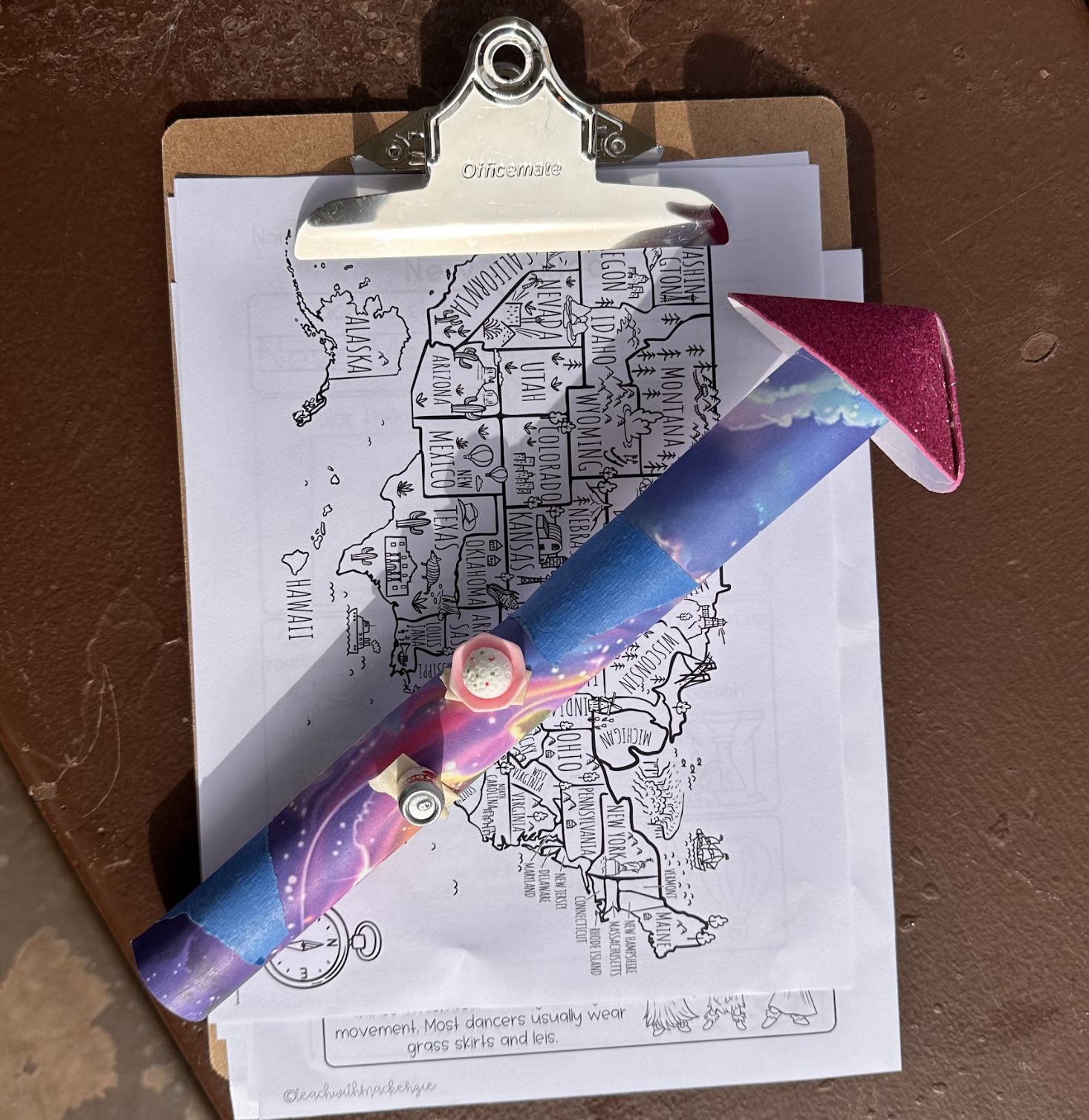
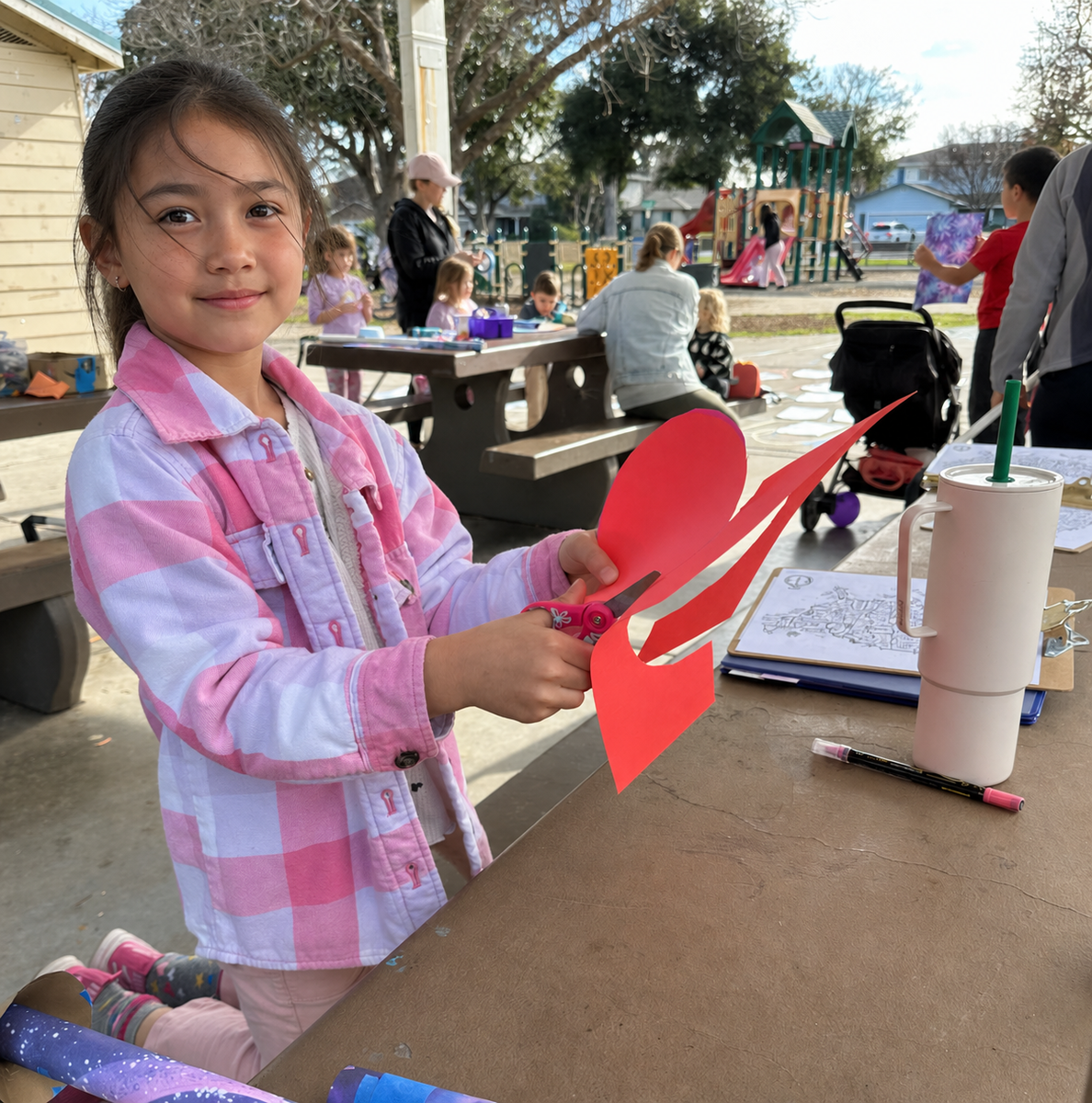
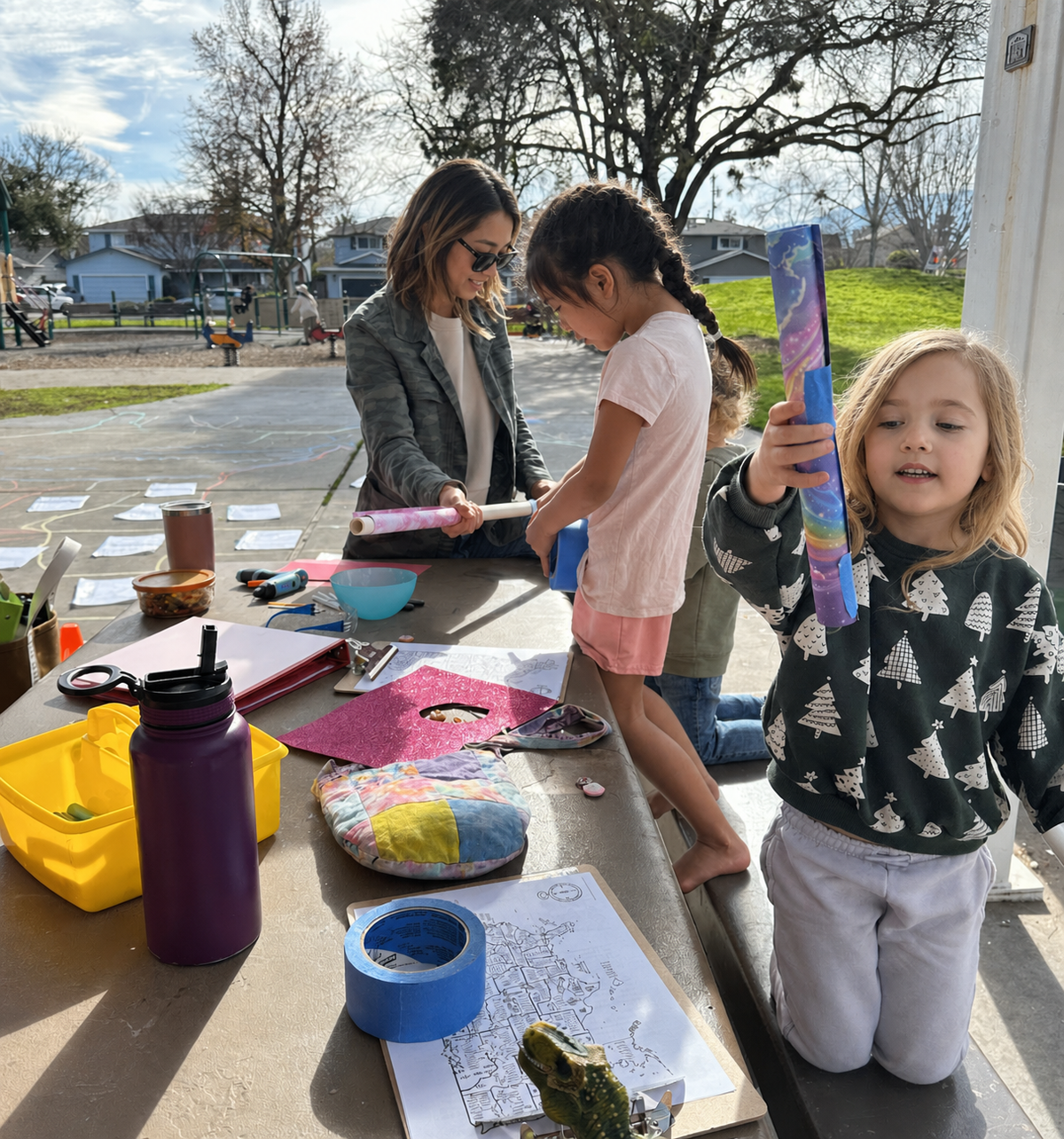
Once the borders were secured, the children took over. After selecting their 'snack-stronaut' payloads and constructing paper rockets, they gathered around our home state of California. The challenge was simple but physically demanding: orient themselves using cardinal directions, aim for a target state, and stomp on an empty soda bottle to launch. What followed was a beautiful, kinetic chaos. Rockets soared, bodies sprinted across the Midwest to retrieve state worksheets, and the pavement became a living, breathing atlas. They weren't just memorizing names; they were measuring distance with their strides and direction with their bodies.
Later, at a local pump track, this physical learning shifted gears. We watched Arthur, Wyatt, Nora, and Leo loop the dirt track with fierce focus, Wyatt humming a quiet tune as he rode. There were falls and band-aids, but the resilience was immediate—they dusted off and climbed back on. The most profound moment of self-regulation occurred when they approached the advanced track. Facing dirt jumps twice their height, the children didn't recklessly plunge in, nor did they retreat in fear. Instead, they parked their bikes and explored the massive mounds on foot, climbing up and sliding down on their bottoms, laughing. They respected the material reality of the terrain, translating a physical risk into a joyful, self-scaled game.
In our parent book club that week, we debated the boundaries of childhood independence. How much responsibility is empowering, and how much is a burden? Watching the children on the pump track provided our answer. When we step back and offer an open, unpressured environment, children naturally scale their own challenges. They don't need us to draw perfect maps or set artificial limits; they need us to trust their bodies to find the line between courage and caution. Free play isn't a break from learning—it is the very arena where self-direction is forged.
Children do not need every challenge calibrated for them. Given room to observe, they often find the exact edge between courage and caution for themselves.
What this mission grew
This is a normal Tuesday.
Small groups. Real challenges. Kids in the lead. Come see what a week of missions looks like in your area.
Join the Founding Community →