The Fulcrum Flip
When we handed children electric drills and raw timber, we weren't just teaching simple machines; we were giving them physical proof of their own capacity to move the world.
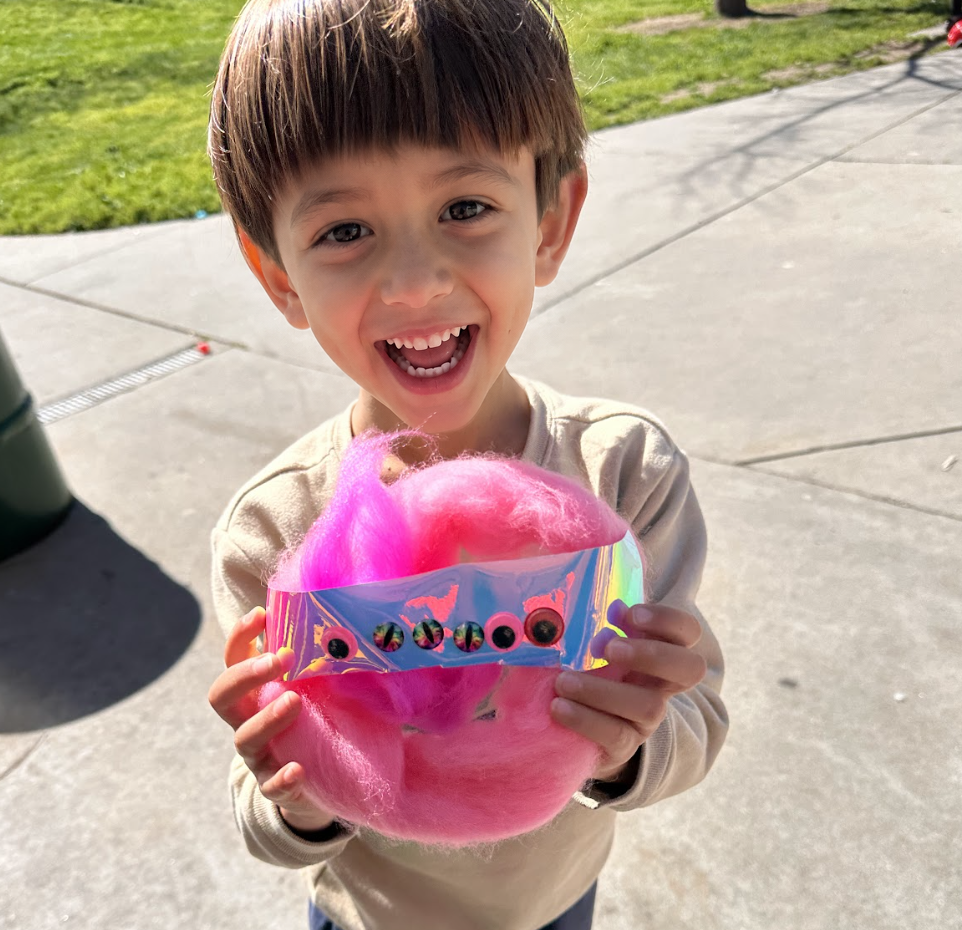
We gathered at Shoup Park to study forces, but the creek claimed us first. Before a single tool was touched, half the pod was wading barefoot through the cold water, testing the buoyancy of hula hoops and watching ping-pong balls bob in the current. We didn't rush them. In our community, free play isn't a detour from learning; it is the sensory baseline that makes the physics real.
When we finally turned to building our lever launchers, the children met the stubborn resistance of real materials. Tiny screws slipped off magnetic drill bits, frustrating adults and kids alike. Rather than stepping in with pre-fabricated parts, we solved it together with a dab of Elmer's glue to hold the threads. Nora warmed up to the electric drill slowly and deliberately, while young Leo gripped it with the unshakeable confidence of a master builder.
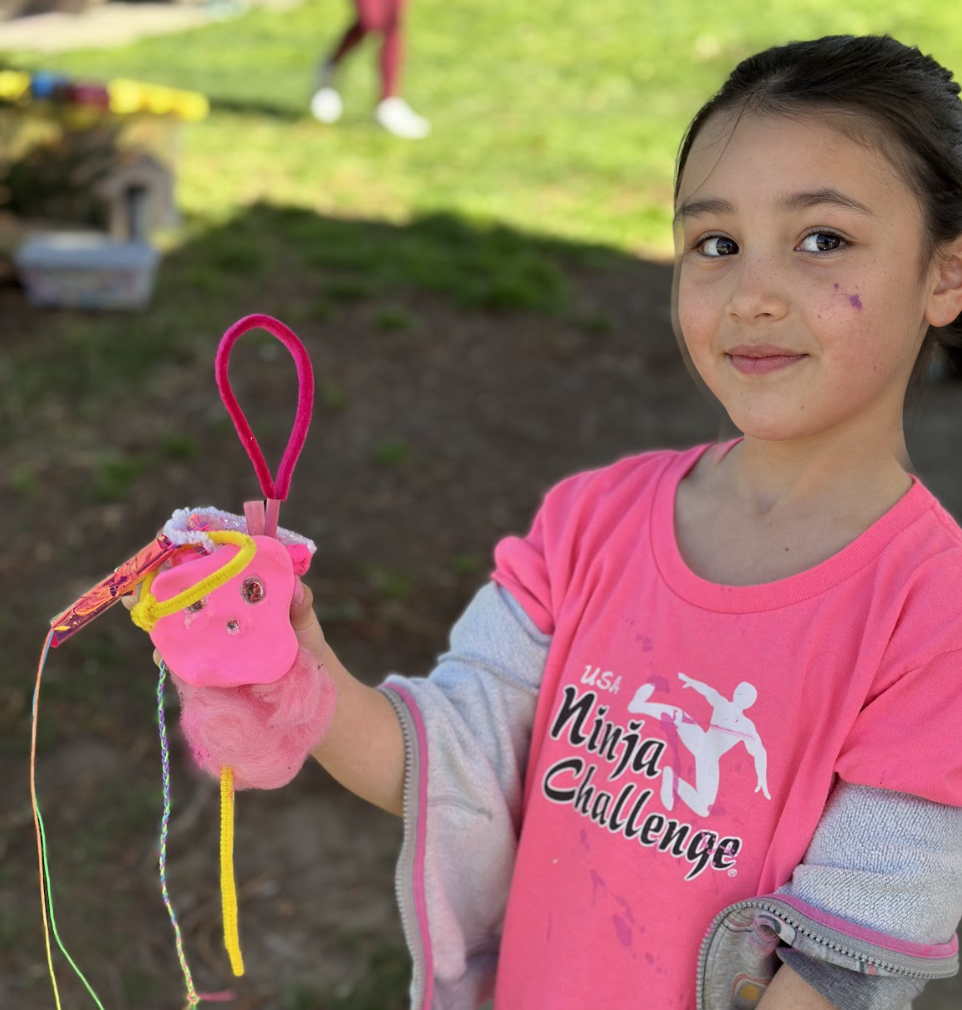
Each child decorated a ping-pong ball 'Launchling' and began testing. Some launchers were rigged backward at first, sending projectiles flying behind the surprised inventors. Rather than correcting them, we watched them notice, pivot, and adjust. When they shifted the fulcrum farther from the cup, they didn't just hear a lecture on mechanical advantage—they watched their Launchlings soar across the meadow.
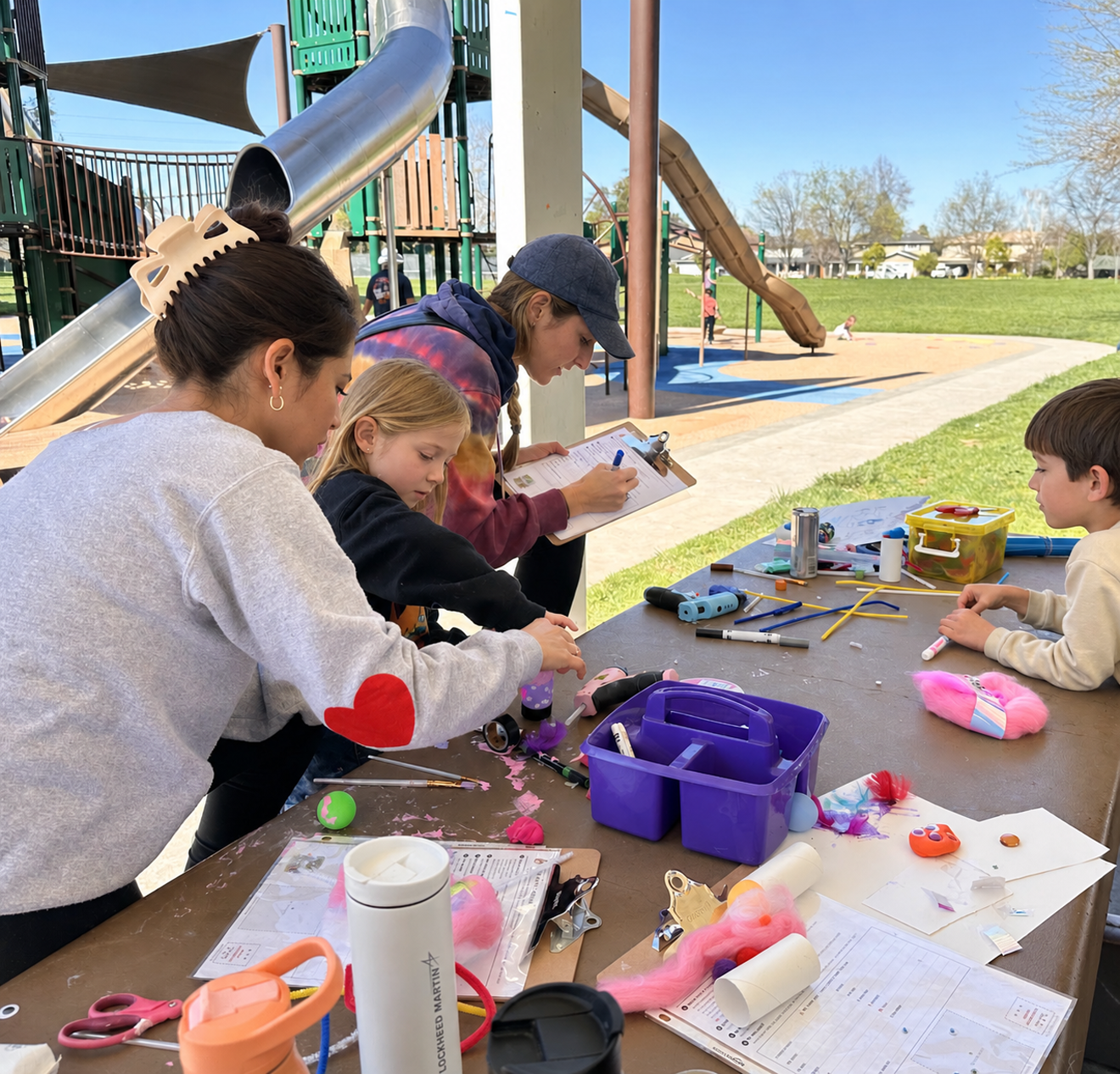
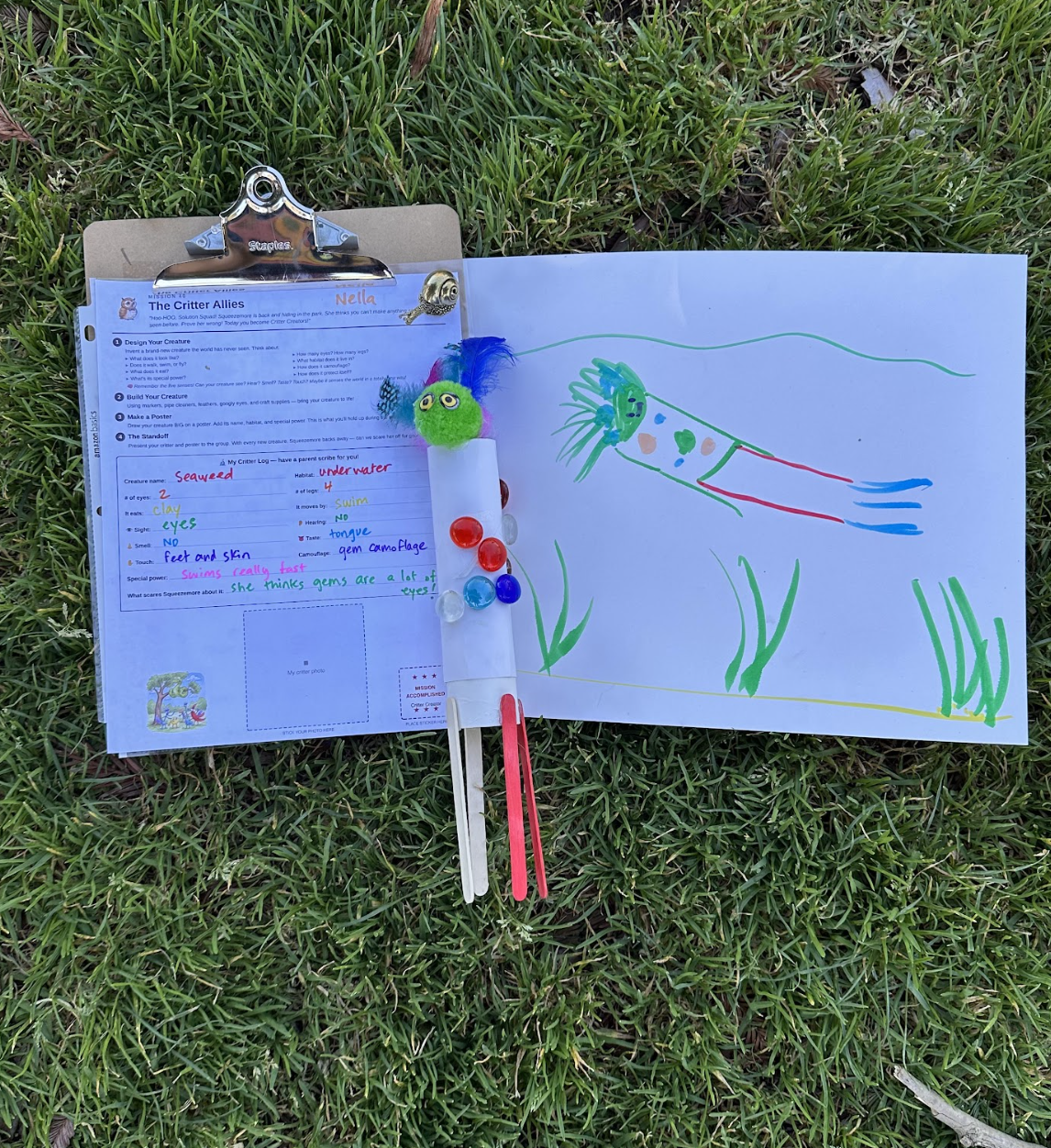
The climax came with a heavy bucket of bricks trapped by our imaginary villain, Tangle. Fiona, confident she could muscle through, tried to lift it alone; it didn't budge. It took five children straining together to lift it even a few inches. But when Owen spotted a log and suggested using it as a giant fulcrum, the game changed. By sliding the log closer to the load, Liam—and then young Leo—lifted the entire heavy bucket single-handedly. The look of absolute triumph on their faces was the sound of a child's self-concept expanding.
As we packed up, we sent each child home with a wild tadpole rescued from a drying puddle near Lexington Reservoir. This wasn't a novelty prize, but a heavy, quiet stewardship. We talked about the daily discipline of dechlorinated water, the slow magic of metamorphosis, and the real, fragile uncertainty of caring for another living thing. We trust them to carry this learning home—somewhere we adults could never script.
They didn't just memorize a formula for torque; they felt the mechanical advantage vibrating in their own arms.
What this mission grew
This is a normal Tuesday.
Small groups. Real challenges. Kids in the lead. Come see what a week of missions looks like in your area.
Join the Founding Community →