The Cricket Courtyard
We transitioned from mechanical tools to the fragile, unpredictable world of the Living Web—engineering bio-active habitats that transformed a science lesson into a slow, patient relationship of care.
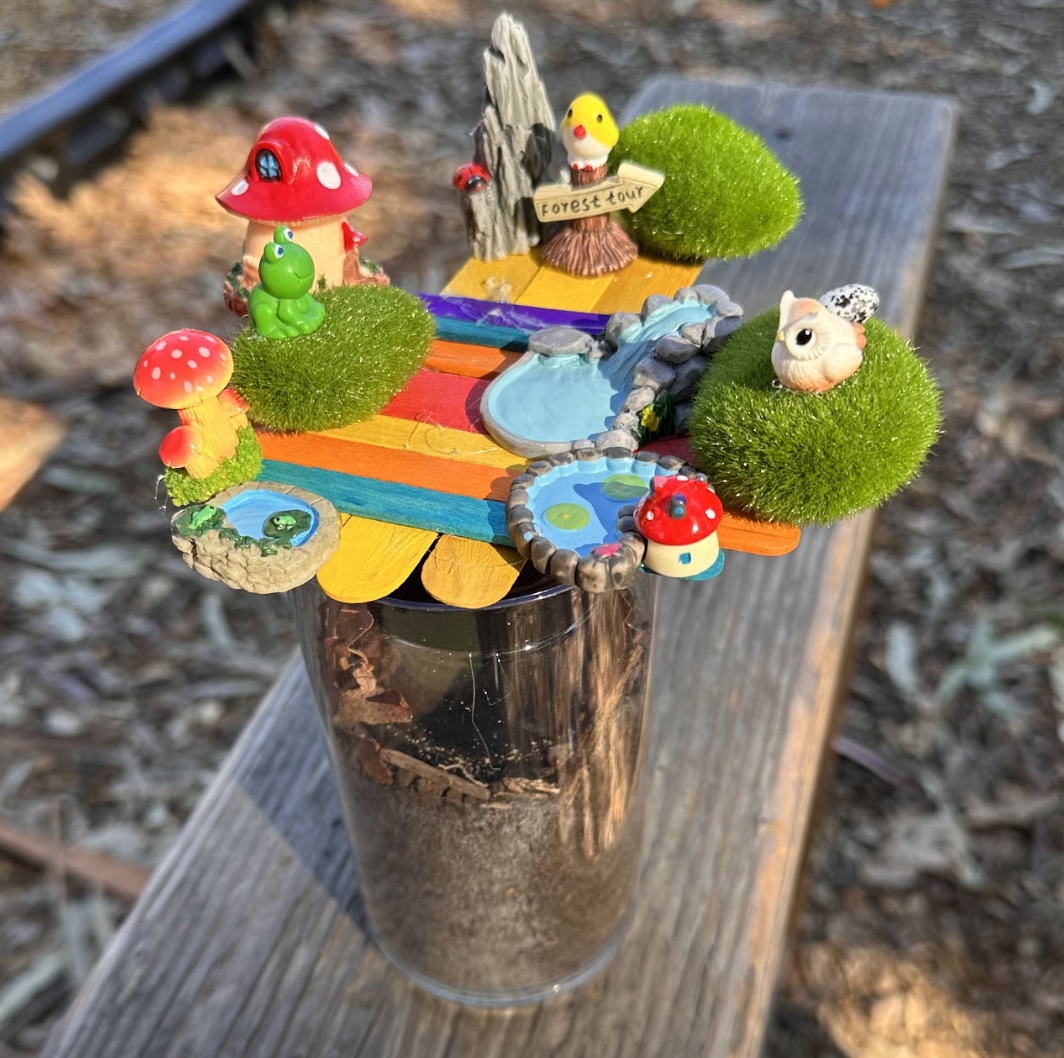
In our first unit, the children mastered the external instruments of discovery—compasses, maps, rockets, and telescopes. With this mission, we turned our gaze inward and downward, stepping into the fragile, interconnected world of the Living Web. We gathered at De Anza Park on a biting February morning under a bruised sky. Leo, our resident seven-year-old meteorologist, studied the clouds and confidently promised we had until exactly noon before the rain would fall. He was nearly perfect; the first drops arrived at 12:15 PM.
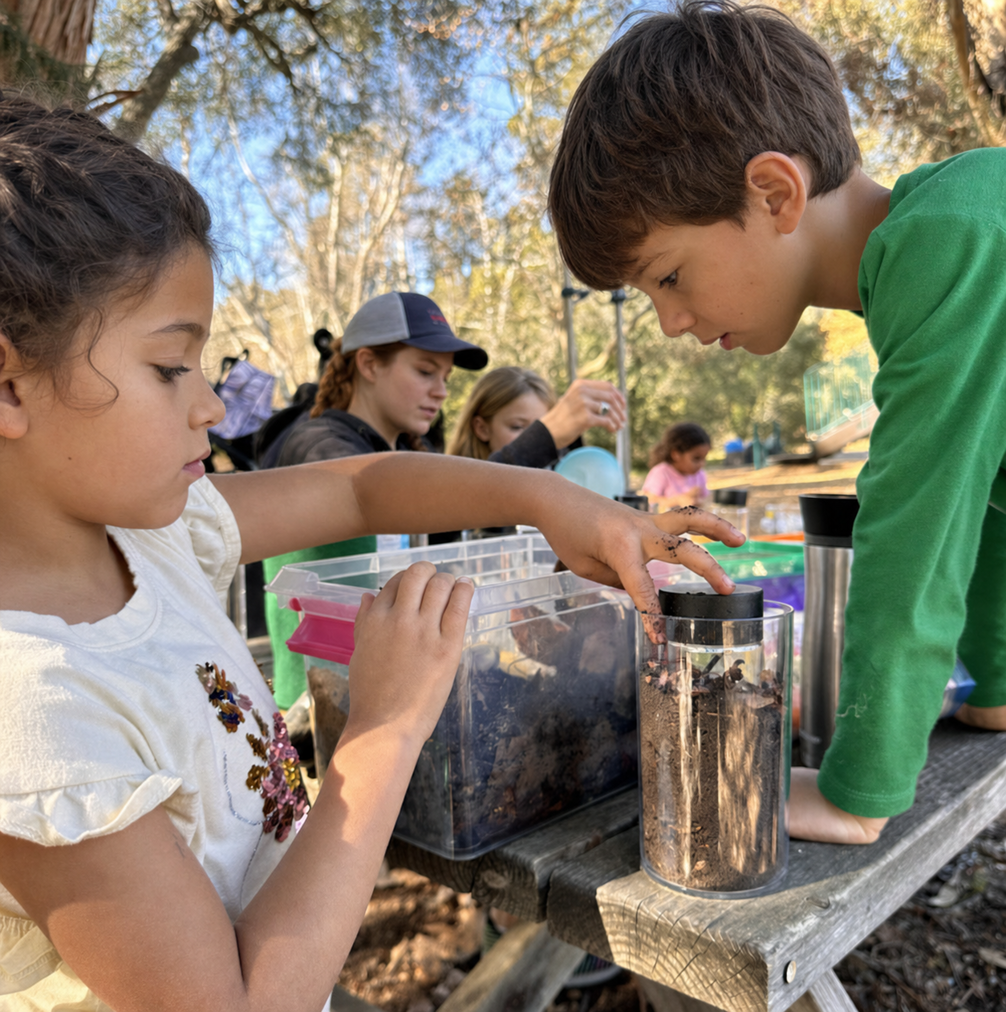
The challenge was a leap in complexity: engineering a two-story, bio-active Cricket Bungalow. This was not a sterile classroom craft, but an exercise in ecological design thinking that forced the children to wrestle with the stubborn resistance of real materials. They packed damp soil, planted a tiny forest of chia seeds, and carefully introduced a living "janitorial crew" of wriggling earthworms, springtails, and scurrying isopods. As educators, we had to combat our own "tunnel-vision" anxiety—scrambling to ensure every child received the exact scoop of soil and the liveliest crickets—only to watch the children navigate the physical complexity with remarkable, self-regulated patience.
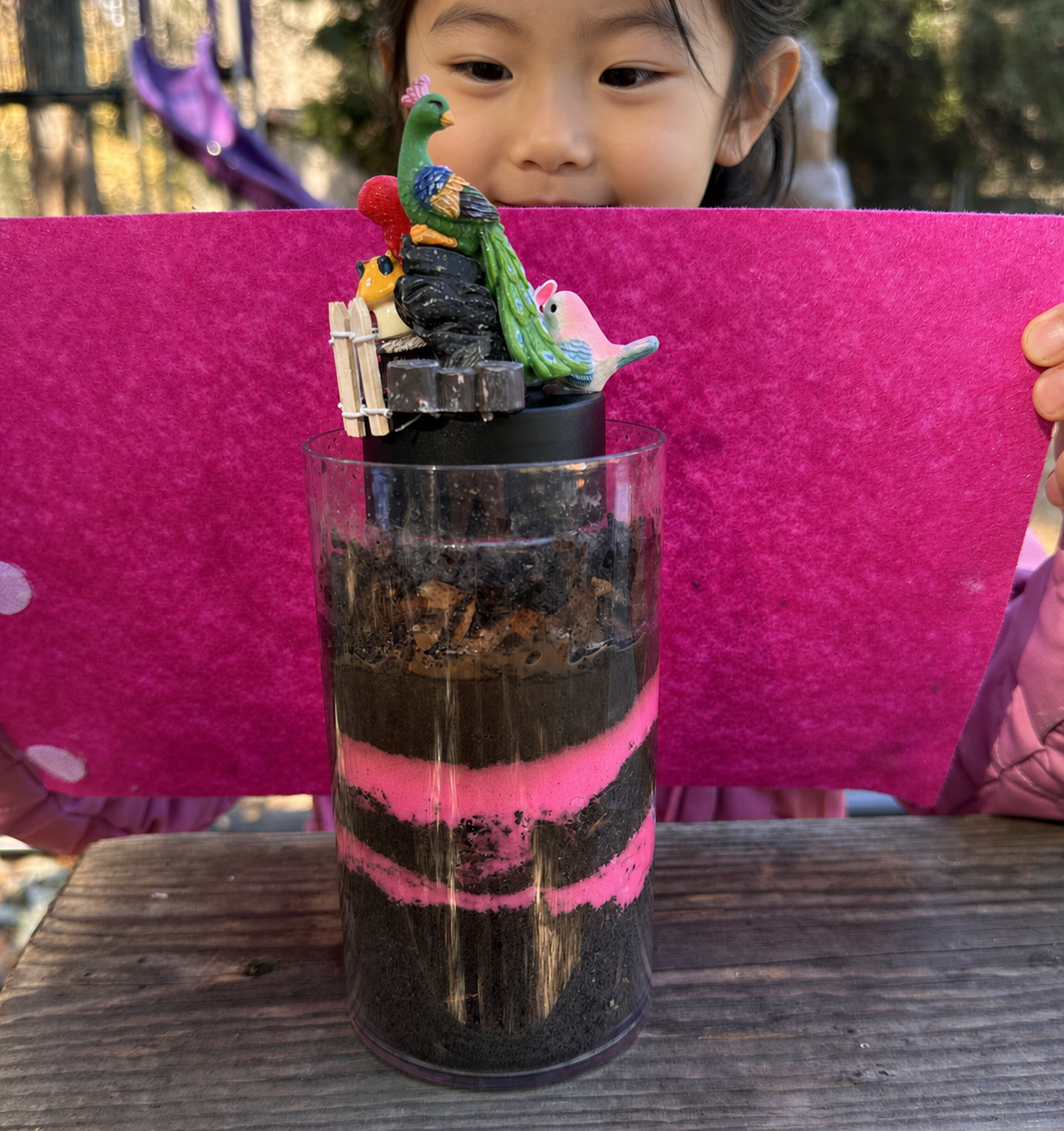
By sending the children home with these tiny, chirping ecosystems, the learning escaped the park boundaries. We surfaced the beautiful, heavy reality of stewardship: the quiet daily feedings, the wild excitement of escapees (including one bold cricket who took up residence inside a home fireplace heater), and the inevitable, gentle encounters with loss when a fragile life ended. This wasn't a theoretical lesson on food webs; it was a relational practice of care that taught them that living systems require consistency, and that small creatures play massive roles.
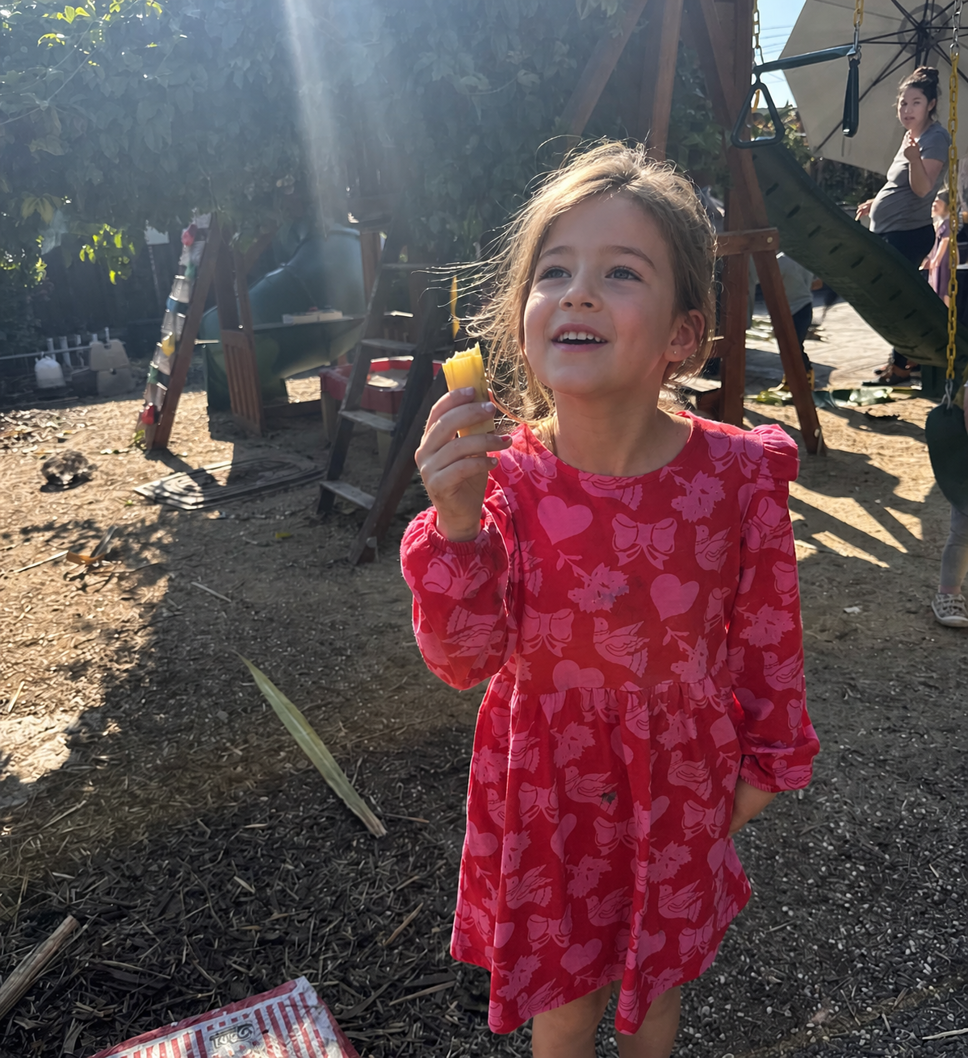
We deliberately contrast this deep engagement with conventional schooling. Instead of a multiple-choice test on ecosystems, we watched Julian stand before his peers to defend and explain his own multi-variable Coke-and-Mentos pressure experiment, while Clara sat rapt, holding her cricket container high so her tiny companion could "watch." Later, we walked a chalk-drawn Quest Map together, where the children didn't regurgitate facts but instead reflected on their own progress through the "Wall of Growth" and the "Forest of Practice"—learning to articulate where they felt stuck and how they planned to persevere.
Between these moments of intense focus, the zipline became a different kind of laboratory. Solo rides evolved into a group problem: how could three children hold on, coordinate their weight, and travel together in one giant laughing bundle? Nobody assigned that challenge. They invented it, tested configurations, negotiated roles, and learned the social physics of moving as one.
There is something profoundly different about sending a child home with a living creature. The mission doesn’t end at noon; it follows them into their kitchens and bedrooms, transforming a science lesson into a slow, patient relationship of care.
What this mission grew
This is a normal Tuesday.
Small groups. Real challenges. Kids in the lead. Come see what a week of missions looks like in your area.
Join the Founding Community →