Mysterious Materials
Five identical white powders, a heat source, and a splash of vinegar. When we challenged our children to decode the physical world, we watched them move from cautious observation to wild, self-directed chemistry.
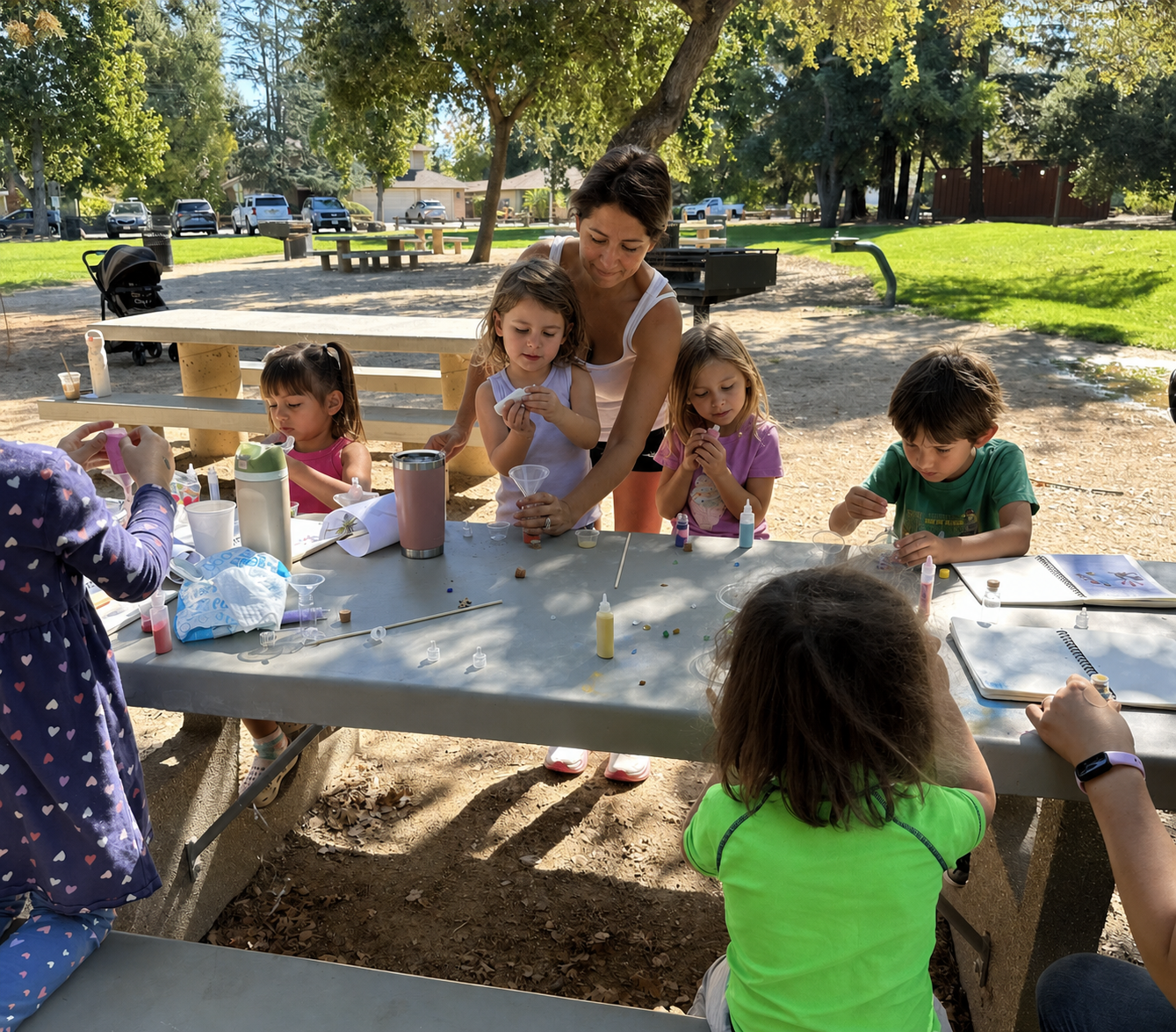
At first glance, the five jars looked identical: fine, white, and silent. Salt, powdered sugar, baking soda, flour, and sand. To unlock the next step of their adventure, our children couldn't just look—they had to engage with the stubborn, surprising resistance of real materials. We set up testing stations in the park, step-by-step guides in hand, ready to facilitate a tidy, structured science lesson. But materials have a way of defying neat plans.
The children moved from observing physical properties, to manipulating them through heat and acid, to inventing their own bubbly concoctions. Working in pairs, they began to feel the gritty friction of sand, watched flour turn into a stubborn, gluey paste, and held their breath as we applied heat to the sugar, watching it melt, brown, and release the rich, sweet scent of caramel. The real magic, however, happened when vinegar met baking soda. The sudden, violent eruption of bubbles sparked something beyond the script.
As educators, we often feel the urge to keep kids moving along a pre-planned track. But once the official 'tests' were complete and the puzzle solved, the children didn't stop. They transitioned seamlessly into what we realized was the deepest learning of the day: unstructured potion-making. Toby, June, and Leo spent the next hour meticulously mixing, dripping, and observing. Rather than a conventional chemistry quiz, we watched the children defend their imaginary 'potions,' explaining with absolute conviction how their glittery, bubbling mixtures would behave.
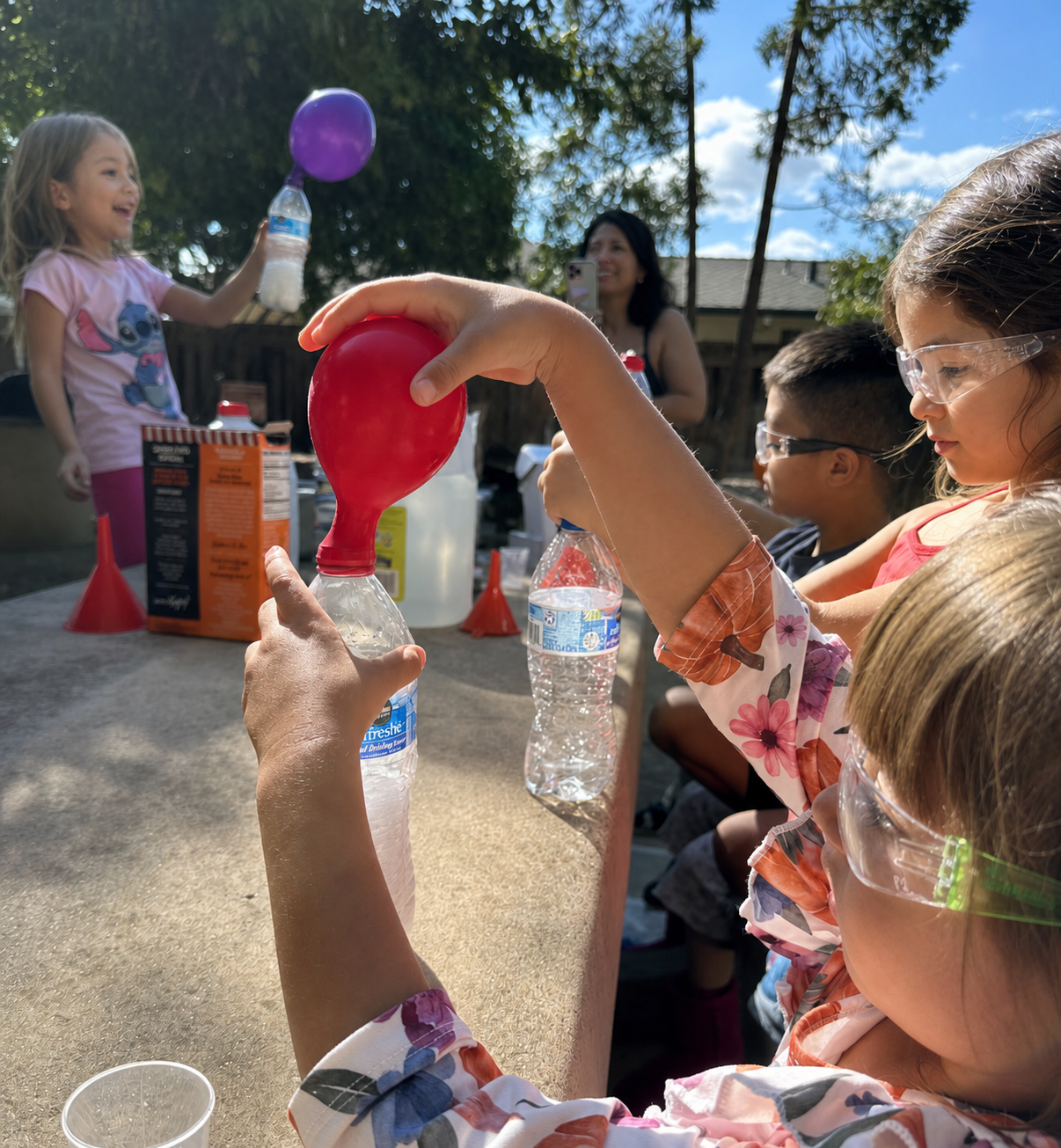
By the end, the table was a sticky slurry of flour paste and spent vinegar. That mess was not evidence that the lesson had gone off track; it was evidence that children had been allowed to investigate a real reaction instead of watching an adult demonstrate a tidy one. Their questions became more precise because the consequences were sitting on their hands, their tools, and the table in front of them.
We planned a twenty-minute chemistry demonstration, but the children turned it into a two-hour masterclass in self-directed exploration. That is where real science lives.
What this mission grew
This is a normal Tuesday.
Small groups. Real challenges. Kids in the lead. Come see what a week of missions looks like in your area.
Join the Founding Community →