Magnetic Pufferfish Rescuers
A pufferfish family needed to cross a treacherous, dark ocean ravine. To guide them, the children engineered custom deep-sea rovers with magnetic cores—then learned to pilot them from beneath the table, navigating invisible forces and the physical limits of their own designs.
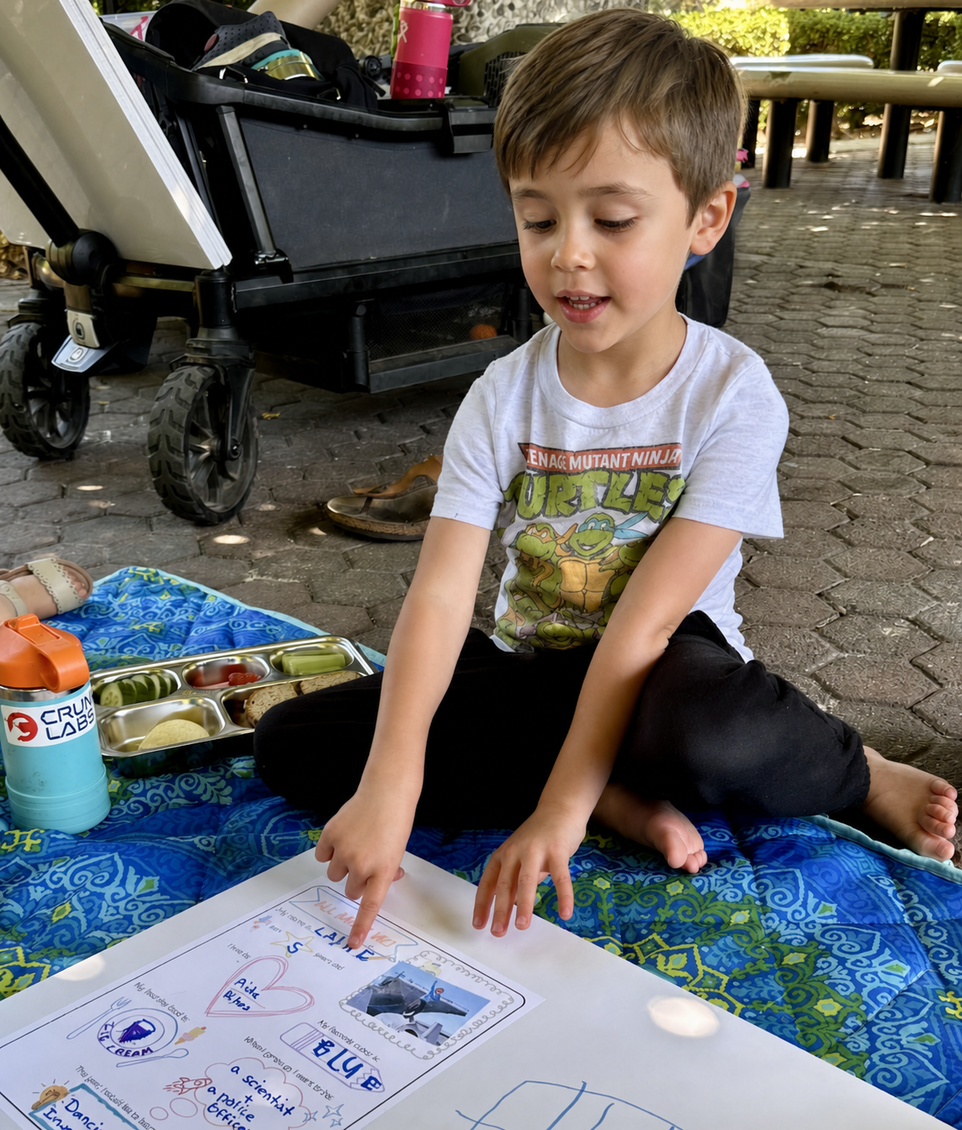
We began not with a lecture on magnetic fields, but with sand, climbing, and getting the "wiggles out" at the park. We are learning to trust that free play is not a distraction from the mission; it is the essential runway for deep focus. When we finally gathered on our blankets under the shade of the trees, Liam and Clara stood up to share the home adventures of our traveling mascot, Professor Hootenanny. For a four-year-old, speaking to a group is its own kind of brave navigation.
Then, the deep-sea challenge was revealed: a pufferfish family needed to transport a glowing jewel across a dark, tabletop ocean ravine. To do it, the children had to design and build a submarine rover using boxes, foam, pipe cleaners, and air-drying clay. But there was a catch: the rovers had to be piloted entirely by remote force, using a magnetic wand swept beneath the table to pull a neodymium magnet hidden inside the craft.
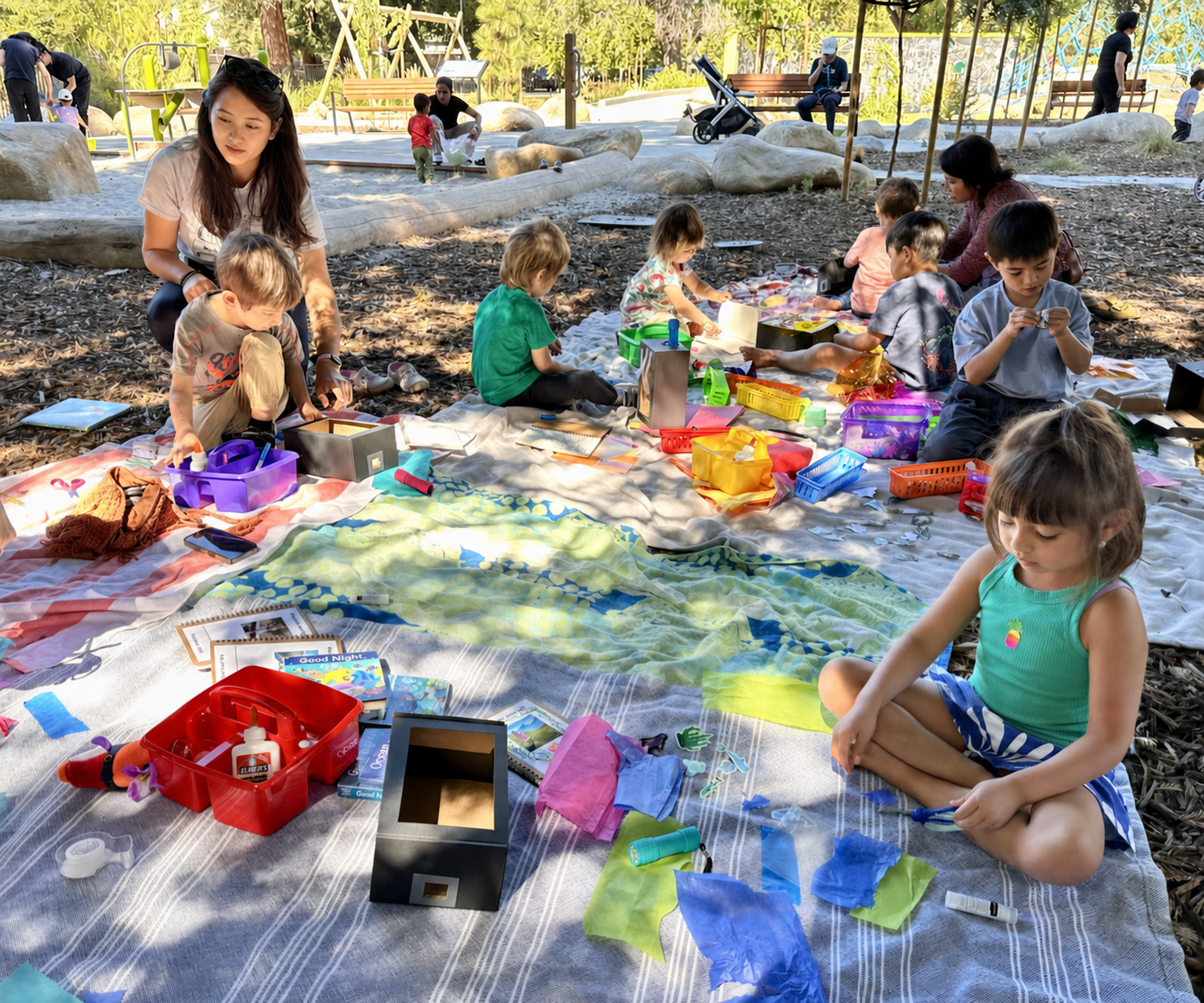
This is where design thinking met the stubborn resistance of real materials. The children quickly discovered that physics is an unyielding partner. If they loaded their rovers with too much heavy clay, the magnetic pull from below wasn't strong enough to budge the craft. If they made them too light or unbalanced, the rover would spin wildly or flip over when the wand passed beneath. Hazel built elaborate, protective compartments for her cargo, while Julian experimented with animal-mimicking fins. Every child had to iteratively test, shave off clay, reposition their magnet, and try again.
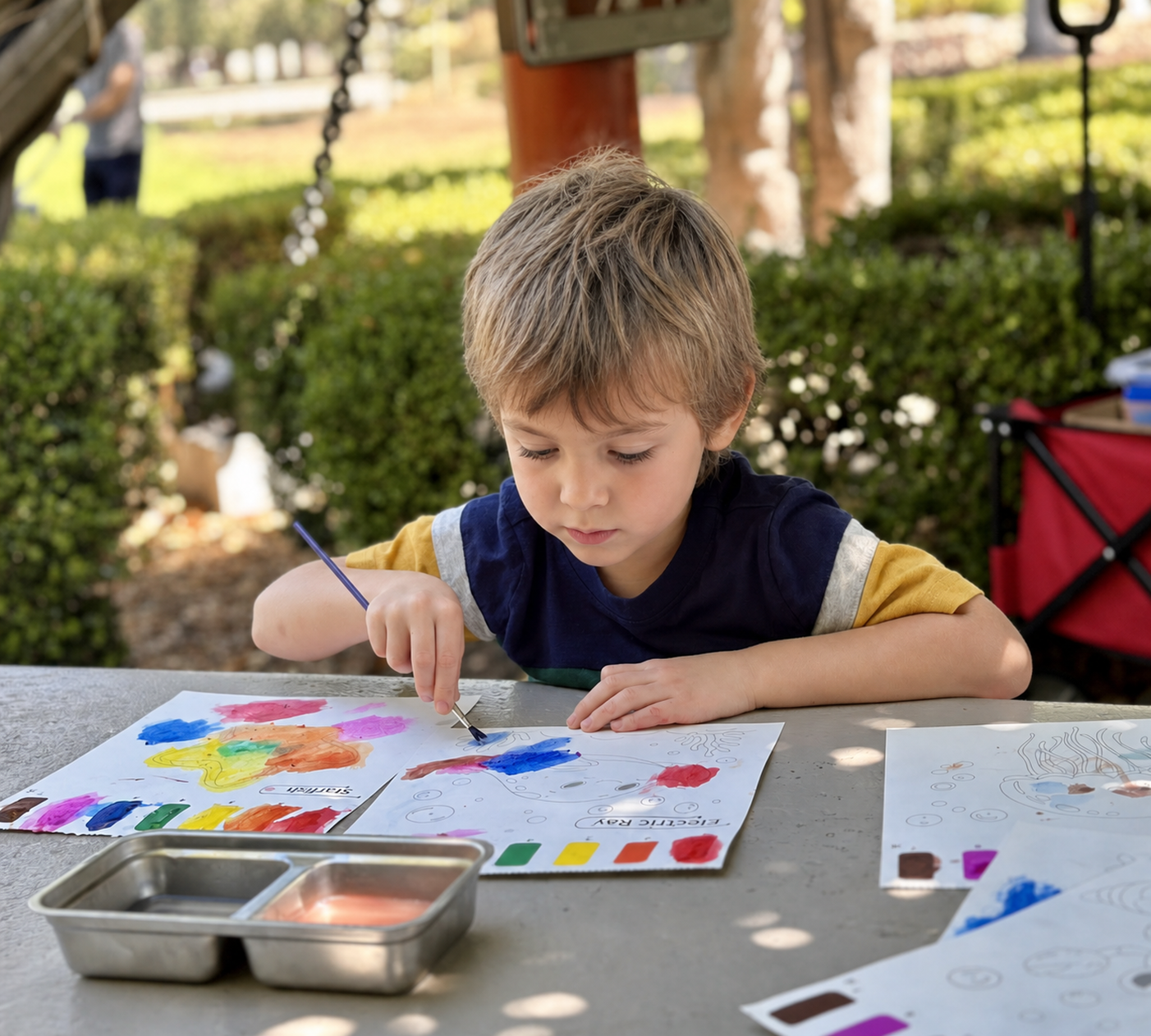
Navigating the maze itself required an entirely different kind of intelligence: sensory empathy. Because the children couldn't see their hands beneath the table, they had to steer by feel, learning to sense the invisible tension of the magnetic field. They had to slow down, steady their breathing, and gently coax their rovers past deep-ocean predators.
The spirit of mutual support spilled over into the rest of our week. When Sophia hesitated at the top of a dark, intimidating tunnel slide at the park, she didn't need adults to rescue her. Instead, Julian and Hazel called up through the tube, offering sweet, echoing words of encouragement and advice until she found her footing. By stepping back, we watched the children carry their learning into spaces we could never have scripted—turning a lesson on invisible forces into a practice of visible kindness.
The children had to steer by feel, learning to sense the invisible tension of the magnetic field. It was a beautiful lesson in slowing down to listen to what the materials were telling them.
What this mission grew
This is a normal Tuesday.
Small groups. Real challenges. Kids in the lead. Come see what a week of missions looks like in your area.
Join the Founding Community →