Hornworm Habitat Build
On a stormy winter morning, we moved indoors to face the beautiful, messy realities of biology—confronting the loss of a tiny fish, wrestling with the rigid physics of plastic mesh, and designing cozy sanctuaries for our ravenous hornworms.
A steady, soaking winter rain and rumbling thunder forced us indoors, but the living world has a way of refusing to be sidelined. Just before we gathered, we discovered that one of our community fish had died overnight. Rather than quietly disposing of it, we leaned into the moment, placing the fish under our bifocal microscope. The children crowded in, hushed and spellbound. They studied the iridescent shimmer of scales, the architecture of tiny fins, and the glassy surface of its eye. It was a poignant, unplanned lesson in the fragility and beauty of living systems—a moment of quiet reverence that set the tone for the day's deeper work.
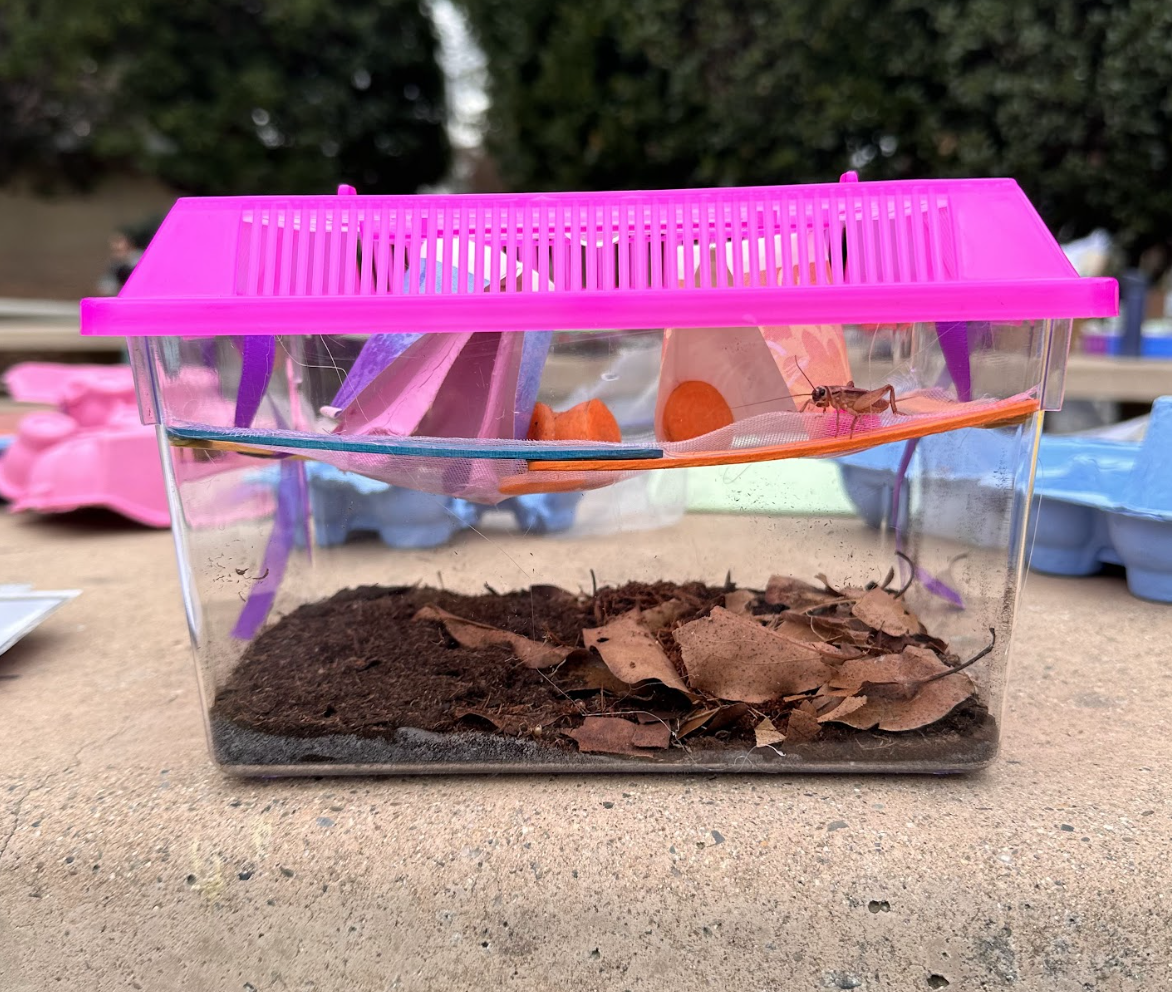
To prepare for our ravenous teal hornworms, we transformed our indoor space into a balmy, 78-degree sanctuary, mimicking summer to prevent the creatures from entering a months-long winter diapause. The earthy, sharp scent of freshly cut tomato leaves filled the air as the children took on a dual challenge: engineering functional habitats that could manage the realities of insect waste (frass collection), and creating symmetrical painted moths as creative stand-ins for the transformations to come.
True design thinking is never just an intellectual exercise; it lives in the resistance of real materials. Leo, Wyatt, June, and Ella set out to build the habitats, but quickly discovered that trimming rigid plastic fencing to fit snugly inside mesh enclosures was a stubborn physical puzzle. It required patience, hand strength, and steady teamwork to tape and secure the structures. Meanwhile, Nora, Ruby, Rowan, and Arthur dove into moth-making. Nora wrestled with the geometry of symmetry, discovering through three trial-and-error attempts that the fold of her paper must remain entirely intact to create a true mirror image. These small frustrations—the stubborn plastic, the severed paper wings—are where real learning crystallizes.
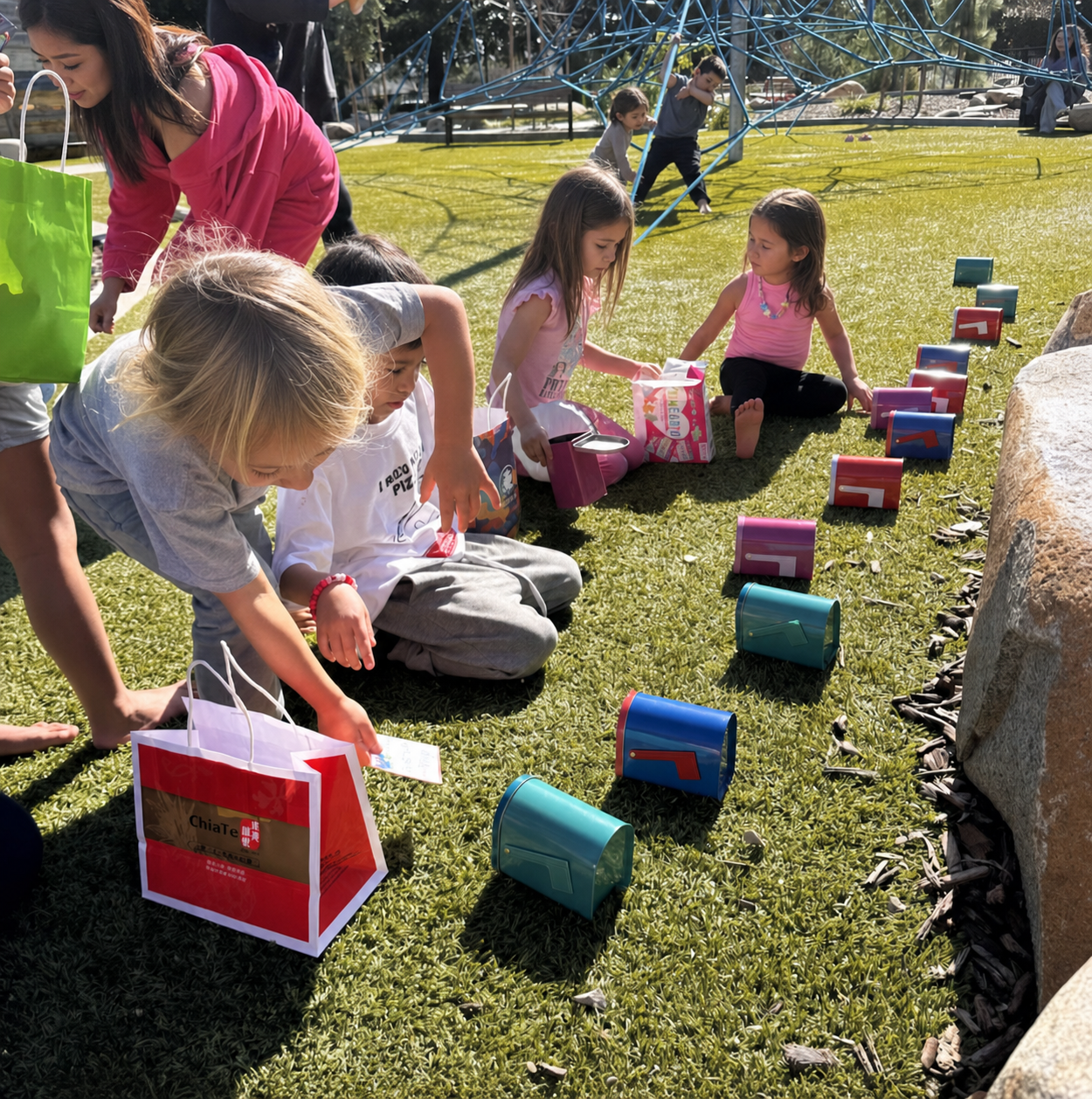
As the rain poured outside, the boundaries between structured engineering and free play naturally dissolved. The kids drifted from calculating symmetry and managing insect poop to playing Candyland, bouncing on couches, and inventing an energetic indoor game of toilet tag. To an outside observer, this might look like a distraction. To us, it is the core of the Skip School philosophy. When children negotiate their own rules, navigate physical space, and resolve disputes without adult intervention, they are practicing the complex social choreography of life. We don't need to script every moment; our role is to build the rich soil, offer a meaningful challenge, and trust them to carry their learning to places we never could have planned.
We don't need to push the learning or script every outcome. Our job is to build the rich soil, step back, and trust the children to grow in ways we couldn't have designed.
What this mission grew
This is a normal Tuesday.
Small groups. Real challenges. Kids in the lead. Come see what a week of missions looks like in your area.
Join the Founding Community →